

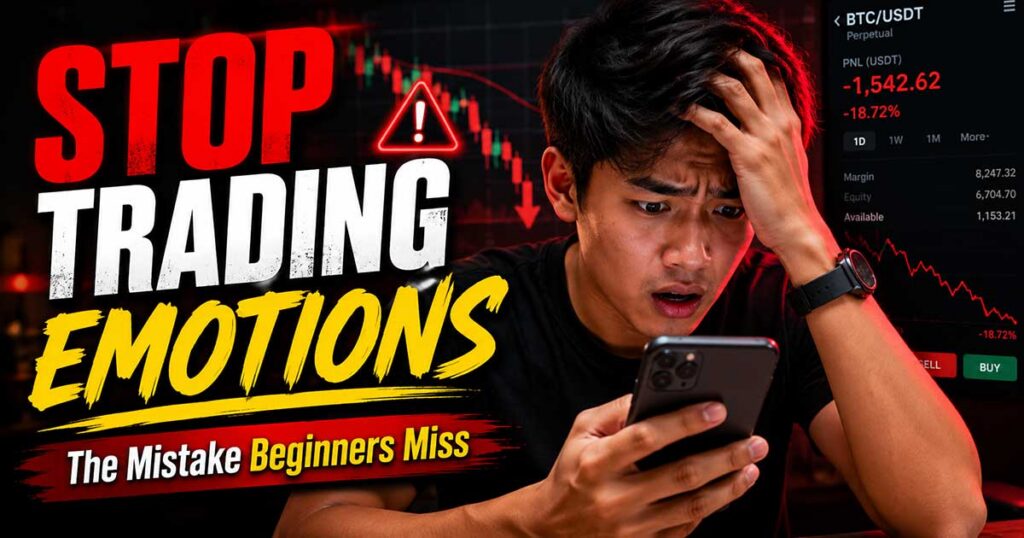
Most beginners focus on strategies, indicators, and finding the perfect entry point. Yet one of the biggest causes of trading losses is often ignored: emotional trading mistakes.
Many new traders believe they lose because they need a better strategy. In reality, fear, greed, frustration, and impatience often have a bigger impact than technical knowledge.
If you have ever increased your trade size after a loss, entered trades out of boredom, or tried to recover money quickly, this guide is for you.

Quick Answer
The most common emotional trading mistake beginners ignore is allowing emotions to influence decisions instead of following a trading plan. This often leads to overtrading, revenge trading, poor risk management, and inconsistent results.
Who This Guide Is For
- New traders learning market basics
- Mobile trading users
- People starting with a low deposit
- Online earning enthusiasts exploring trading
- Traders who struggle after losing trades
- Anyone interested in improving beginner psychology
Table of Contents
- Understanding Emotional Trading
- Real Beginner Scenario
- Step-by-Step Guide
- Comparison Table
- Beginner Strategies
- Common Mistakes
- Common Myths
- Beginner Checklist
- Pros & Cons
- Tips to Improve Results
- Warning Box
- Best Platforms
- FAQs
- Read Next
Understanding Emotional Trading
Trading is not just about charts. It is also about managing your reactions.
A beginner may spend hours learning candlestick patterns but only seconds controlling emotions after a loss.
The most dangerous emotional triggers include:
- Fear of missing out (FOMO)
- Greed after a winning streak
- Frustration after losses
- Impatience during slow markets
- Overconfidence after success
These emotions can push traders into decisions they would never make if they were calm and focused.
Beginner Tip:
A profitable strategy can become unprofitable when emotions repeatedly override trading rules.
To better understand trading mindset, read our guide on Trading Psychology.
Real Beginner Scenario
Imagine a beginner trader named Rahim.
He starts with a small account and wins three trades in a row. Feeling confident, he increases his position size.
The next trade loses.
Instead of following his plan, he immediately opens another trade to recover the loss.
That trade also loses.
Now frustration takes over. Within an hour, he places several impulsive trades and loses a significant portion of his account.
The strategy was not the problem.
His emotions were.
Step-by-Step Guide to Avoid Emotional Trading
Step 1: Create Trading Rules
- Define entry conditions
- Define exit conditions
- Set maximum daily loss limits
- Set maximum trade count
Step 2: Use a Demo Account First
A demo account helps you practice decision-making without financial pressure.
Step 3: Track Emotions
Keep a trading journal and write:
- How you felt before the trade
- Why you entered
- Whether you followed your rules
Step 4: Take Breaks After Losses
A short break can prevent emotional decisions and reduce revenge trading behavior.
Step 5: Focus on Process
Judge yourself by following your plan, not by a single trade outcome.
🎯 Start Learning Trading Safely
Practice with a beginner-friendly platform and improve your skills step by step.Practice Trading First
Emotional Trader vs Disciplined Trader
| Situation | Emotional Trader | Disciplined Trader |
|---|---|---|
| After a Loss | Tries to recover immediately | Reviews the trade calmly |
| After a Win | Increases risk impulsively | Follows risk rules |
| Market Uncertainty | Forces trades | Waits patiently |
| Slow Market | Gets bored and overtrades | Protects capital |
| Risk Management | Emotion-based | Rule-based |
Beginner Strategies for Emotional Control
- Trade only during planned sessions
- Use fixed position sizes
- Set daily trade limits
- Avoid trading when tired or stressed
- Review performance weekly
- Focus on consistency rather than excitement
You may also find our guide useful on how to control trading emotions.
Common Mistakes Beginners Make
- Overtrading after losses
- Revenge trading to recover money quickly
- Increasing position size emotionally
- Ignoring risk management rules
- Changing strategies too frequently
- Following social media signals blindly
Common Myths About Trading Emotions
Myth: Professional Traders Have No Emotions
Reality: Professionals experience emotions too. They simply manage them better.
Myth: More Trades Mean More Profit
Reality: More trades often mean more mistakes.
Myth: One Big Trade Can Recover Everything
Reality: This mindset often creates larger losses.
Myth: Emotions Only Affect Beginners
Reality: Emotional pressure affects traders at every level.
Beginner Emotional Trading Checklist
- ☑ I have a trading plan
- ☑ I know my risk per trade
- ☑ I use a demo account for testing
- ☑ I avoid revenge trading
- ☑ I record my trades
- ☑ I stop after reaching daily limits
- ☑ I follow rules consistently
Pros & Cons of Emotional Awareness
Pros
- Better decision-making
- Improved consistency
- Reduced overtrading
- Better risk control
- More confidence over time
Cons
- Requires patience
- Takes time to develop discipline
- Can feel slow compared to emotional trading
Tips to Improve Results
Quick Improvement Tips
- Trade less, analyze more
- Use written trading rules
- Review mistakes weekly
- Accept losses as part of learning
- Focus on long-term consistency
⚠ Important Warning
Trading can involve financial risk. Never trade with money you cannot afford to lose. Emotional decisions often become more dangerous when traders use funds meant for essential expenses.
Best Platforms for Beginners
When choosing a platform, beginners should prioritize:
- Demo account availability
- Mobile trading support
- Simple interface
- Low deposit options
- Educational resources
You can also explore educational trading resources on:
FAQs
What is the most common emotional trading mistake?
The most common mistake is allowing emotions to override a trading plan, which often leads to overtrading and poor risk management.
What is revenge trading?
Revenge trading happens when a trader tries to recover losses immediately by placing impulsive trades.
Can a demo account help with emotional control?
Yes. A demo account allows beginners to practice discipline and decision-making without financial pressure.
Why do beginners overtrade?
Beginners often overtrade because of excitement, frustration, fear of missing opportunities, or the desire to recover losses quickly.
How can I reduce emotional trading?
Use a written trading plan, keep a trading journal, follow risk rules, and take breaks after losses.
Read Next
- Complete Trading Psychology Guide for Beginners
- How to Control Trading Emotions Effectively
- Frequently Asked Trading Questions
Conclusion
Many beginners spend months searching for a better strategy while ignoring the emotional habits that quietly damage their results.
The truth is simple: emotional control is not a bonus skill. It is a core trading skill.
By understanding emotional trading mistakes, avoiding overtrading, preventing revenge trading, and building stronger beginner psychology, you give yourself a much better chance of making thoughtful decisions and developing long-term consistency.
A good strategy matters. But the ability to follow it consistently matters even more.